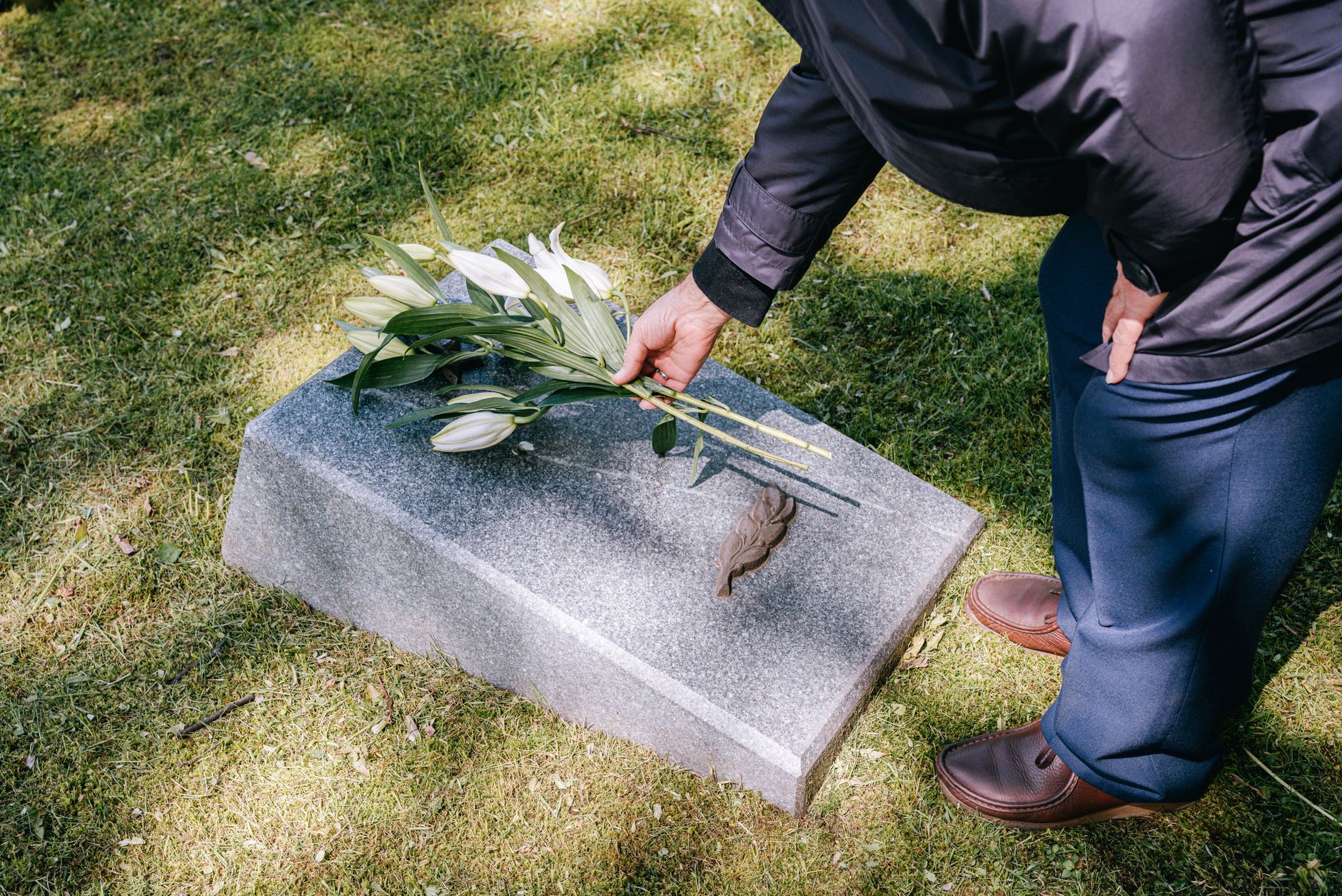
In most of the United States you can scatter cremated ashes at sea without a permit, but you must go at least three nautical miles from shore and report the burial to the Environmental Protection Agency within 30 days. Scattering in a park is the opposite: there is usually no federal filing, but you generally do need written permission from whoever manages the land, and the National Park Service handles these requests through a special use permit.
The confusion comes from two separate legal systems colliding. Ocean scattering is governed federally under the Marine Protection, Research, and Sanctuaries Act, while land scattering is governed by whoever owns the ground — a federal agency, a state park system, a city, or a private owner — plus any state cremation statute. Knowing which body of rules applies to your plan is most of the work.
Table of Contents
- The ocean rule: three miles out and a form afterward
- Who actually says yes in a park
- Where state law adds its own layer
- What this costs, and what you are paying for
- Things families regret not deciding first
- Frequently Asked Questions
The ocean rule: three miles out and a form afterward
The EPA issues a general permit for burial at sea, which means you do not apply in advance. Cremated remains may be scattered at least three nautical miles from land, in any depth of water. There is no fee and no inspection, but the person conducting the burial must notify the EPA regional office covering the departure port within 30 days. Non-cremated remains — a whole-body burial at sea — are treated more strictly.
The same general permit applies, but the site must be chosen for adequate depth, and EPA regional guidance sets minimum depths that vary by coastline, commonly 600 feet in some areas and deeper in others. Anyone considering a full-body burial should contact the relevant EPA region before booking a vessel, because the depth requirement determines how far out the boat must go. Two restrictions catch families off guard. Nothing non-decomposable may go into the water, which rules out plastic or metal urns, mylar balloons, and most artificial flowers. And the three-mile rule means bays, harbors, sounds, and inland lakes and rivers are not covered by the federal permit at all — those are state waters, and state law decides.
Who actually says yes in a park
A park is land with a manager, and the manager's permission is the permit. In the national park system, scattering ashes generally requires a special use permit from the individual park's superintendent, and conditions differ park by park: some designate acceptable areas, exclude developed zones, waterways, trails, and archaeological sites, and prohibit any marker, plaque, or container left behind. State parks run their own systems, and the range is wide. Some state park agencies issue a written authorization much like the Park Service does; others have no process and simply decline.
City and county parks are often the most restrictive in practice, because scattering in a space used daily for recreation draws complaints even where nothing in the code forbids it. The practical approach is to call the specific unit, not the agency headquarters. A ranger or park administrator can tell you in one conversation whether scattering is permitted there, what the lead time is, and whether a fee applies. Plan on weeks rather than days — a permit request handled by one superintendent's office is not an instant transaction, and families scheduling a memorial around it should build in margin.
Where state law adds its own layer
Most states regulate what a crematory and funeral establishment must do with remains far more tightly than what a family may do with them afterward. A common pattern is that scattering is permitted on your own property, on private property with the owner's consent, and on public land or waterways only where the controlling agency allows it. Several states say nothing at all about private scattering, which is not the same as prohibiting it. California is the most prescriptive of the large states and a useful contrast.
Its Health and Safety Code allows scattering at sea no closer than 500 yards from shore, requires the person scattering to file a permit form with the county, and requires written permission from the property owner before scattering on private land. The state's distance figure is shorter than the EPA's three nautical miles — when both apply, the stricter federal number controls. Because the variation is real, verify two things for your state rather than assuming: whether any filing or permit accompanies the scattering itself, and whether your state restricts scattering on public land. The state vital records office or the agency licensing funeral establishments is the authoritative source; a funeral director in that state will usually know the answer without a research detour.
What this costs, and what you are paying for
Scattering is the cheapest disposition decision available, which is a large part of its appeal. The EPA permit is free. A park special use permit typically carries a modest administrative fee or none.
📨 Get Free Funeral Cost Guides Alerts
Free · No spam · Unsubscribe anytime
The real costs are the cremation itself and, for a sea scattering, getting three nautical miles offshore. Charter services sell two versions of that trip. An attended scattering, where the family boards the vessel, runs substantially more than an unattended one, where the captain performs the scattering alone and returns a certificate with the coordinates and often photographs or a GPS log. Unattended service is also what many families end up choosing when relatives are scattered across the country.
- Ask whether the charter files the EPA notification for you or leaves it to the family.
- Confirm the vessel actually goes past three nautical miles, and get the coordinates in writing.
- Ask what happens to the container — a scattering urn designed to dissolve is not the same as a permanent one.
- Check whether the price includes additional passengers, and the cancellation terms for weather.
- If a park is involved, get the permit in hand before you set a date with family.
Things families regret not deciding first
Scattering is irreversible and leaves no address. Families who scatter everything sometimes discover later that one relative wanted a place to visit. Dividing the remains beforehand — scattering a portion and keeping the rest in a cemetery niche, a small urn, or several keepsake urns — costs little and removes that regret. Crematories and funeral homes will divide remains on request. Written consent matters more than it seems.
Permission to scatter on private land should come from the owner in writing, because land changes hands and a verbal arrangement with a neighbor does not transfer. The same applies to a family property held by multiple heirs: one heir's agreement is not the family's. Finally, decide who holds the authority. State law designates a person with the right to control disposition, usually in a fixed order — an agent named in a written directive, then the spouse, then adult children, and onward. When that person's wishes conflict with the rest of the family's, the law resolves it, and the conflict is far easier to settle before the cremation than after.
Frequently Asked Questions
Do I need a permit to scatter ashes at sea?
Not an individual one. The EPA issues a general permit covering all burials at sea, so no advance application is required, but you must notify the EPA regional office for your departure port within 30 days of the scattering.
Can I scatter ashes in a lake or river?
The federal ocean permit does not reach inland waters, so those are governed by state law and by whoever controls the shoreline or waterway. Check with your state environmental or natural resources agency before scattering in fresh water.
Can I scatter ashes on private land I do not own?
Only with the owner's permission, and several states require that permission in writing. Get it documented even where the state does not demand it, since land ownership can change.
Is scattering ashes from an airplane allowed?
Scattering remains from aircraft is generally permitted, but the operator must comply with aviation rules on dropping objects, and nothing but the ashes themselves may be released — no container, bag, or flowers. Use a service that does this routinely rather than arranging it privately.
You Might Also Like
- Dividing Ashes Among Family: Keepsake Urns and Sharing Rules
- Witnessing a Cremation: Policies, Fees, and Religious Reasons
- Why Does Cremation Cost More in Some States Than Others?